
























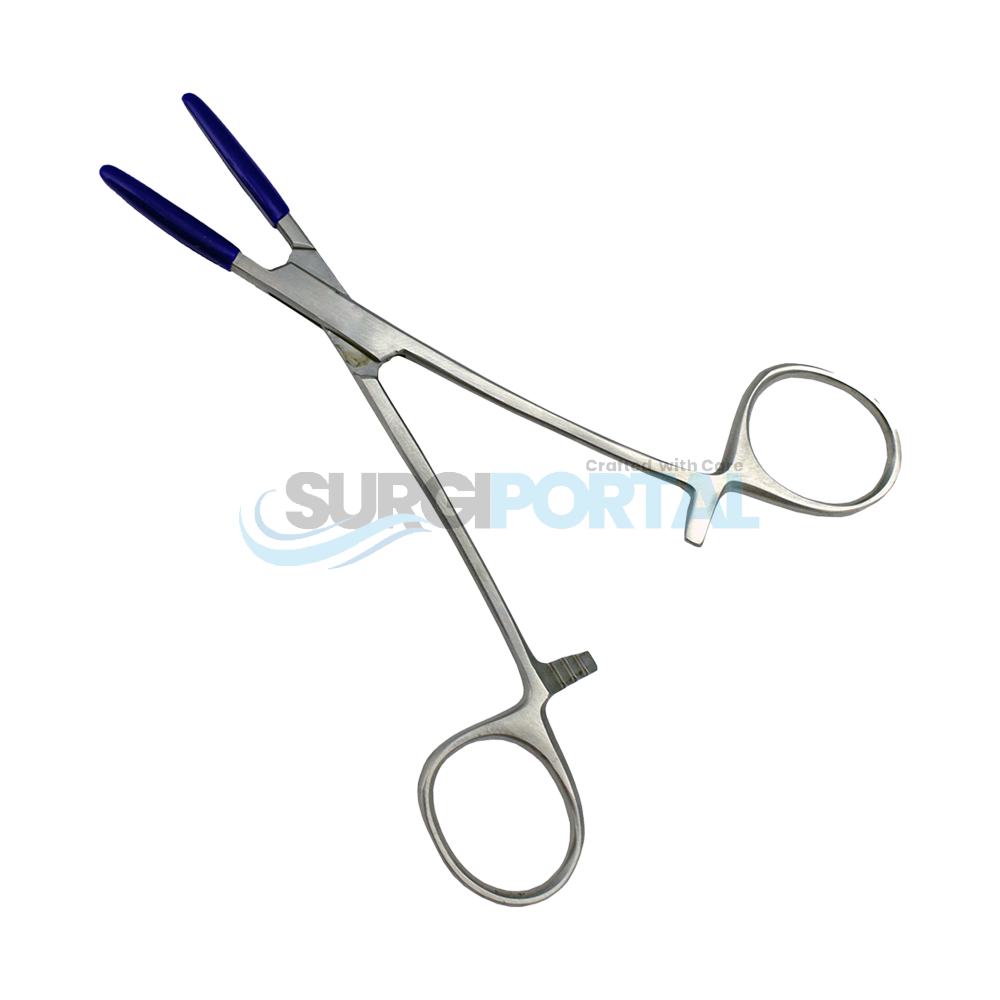
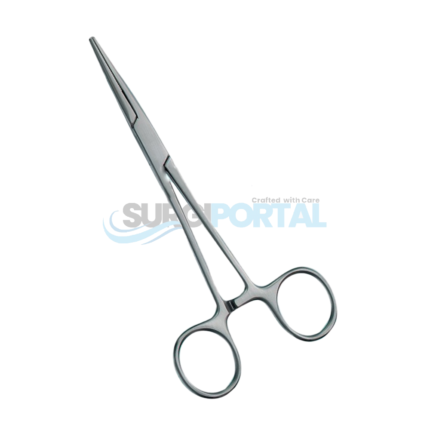
The Hemostatic Clamp, commonly known as artery forceps, is an essential surgical instrument used to control bleeding by clamping blood vessels during surgical procedures. It plays a critical role in achieving hemostasis, allowing surgeons to work in a clear and controlled surgical field. This instrument is widely used across general surgery, trauma surgery, gynecology, orthopedics, and emergency medical procedures.
Designed with precision and reliability in mind, the hemostatic clamp features finely serrated jaws that ensure a secure grip on blood vessels without slipping. The serrations run along the inner surface of the jaws, allowing firm occlusion of arteries and small vessels to prevent blood loss during operations. This controlled clamping is essential for maintaining patient safety and improving surgical accuracy.
Manufactured from premium surgical-grade stainless steel, the hemostatic clamp offers excellent durability, corrosion resistance, and long-term performance. It is engineered to withstand repeated autoclave sterilization cycles without losing its strength or alignment. The high-quality material ensures that the instrument remains reliable even in demanding surgical environments.
The instrument is designed with ergonomic finger ring handles that provide surgeons with a comfortable and stable grip. This allows for precise control during delicate procedures and reduces hand fatigue during long surgeries. The ratcheted locking mechanism enables the clamp to stay securely in place once applied, eliminating the need for continuous manual pressure.
Hemostatic clamps are available in various sizes and designs, including straight, curved, and mosquito variants. Smaller clamps are used for fine vascular work, while larger versions are used for deeper tissue and heavier vessel control. This versatility makes the instrument suitable for a wide range of surgical applications.
The polished stainless steel finish provides a smooth surface that resists staining and allows easy cleaning. This also helps maintain strict hygiene standards in operating rooms, ensuring safe reuse after sterilization.
In surgical practice, the hemostatic clamp is indispensable for procedures such as abdominal surgery, wound repair, organ surgery, vascular surgery, and trauma management. It is often one of the first instruments used during incisions to clamp bleeding vessels and maintain a clear surgical field.
Overall, the Hemostatic Clamp is a fundamental and highly reliable surgical tool that ensures effective bleeding control, surgical precision, and patient safety in a wide range of medical procedures.
Key Features
- Fine serrated jaws for secure vessel clamping
- Essential for bleeding control (hemostasis)
- Made from high-quality surgical stainless steel
- Corrosion and rust resistant construction
- Ratcheted locking mechanism for secure grip
- Ergonomic finger ring handles for comfort
- Available in straight, curved, and mosquito types
- Fully autoclavable and reusable
- High precision for vascular control
- Mirror-polished finish for easy cleaning
- Suitable for multiple surgical specialties
- Long-lasting durability for repeated use
Product Specifications Table
| Specification | Details |
|---|---|
| Product Type | Hemostatic Surgical Forceps |
| Application | Vessel clamping and bleeding control |
| Material | Medical Grade Stainless Steel |
| Finish | Mirror Polished |
| Sterilization | Autoclave Safe |
| Reusability | Reusable |
| Specialty | Hemostasis Instruments |
| Instrument Type | Artery Forceps / Hemostatic Clamp |
| Usage | Surgical bleeding control |
| Product Contents | 1 x Hemostatic Clamp |
Applications
- General surgical procedures
- Trauma and emergency surgery
- Abdominal operations
- Vascular surgery
- Gynecological procedures
- Orthopedic surgeries
- Wound closure and repair
- Artery and vessel ligation
- Surgical dissection support
FAQs
1. What is a hemostatic clamp used for?
It is used to clamp blood vessels and control bleeding during surgical procedures.
2. Are hemostatic clamps and artery forceps the same?
Yes, both terms are commonly used interchangeably in surgical practice.
3. What material is the hemostatic clamp made of?
It is made from high-quality surgical-grade stainless steel.
4. Can the hemostatic clamp be sterilized?
Yes, it is fully autoclavable and designed for repeated sterilization.
5. What types of hemostatic clamps are available?
Common types include straight, curved, and mosquito forceps.
6. In which surgeries is it commonly used?
It is used in general, trauma, vascular, orthopedic, and gynecological surgeries.
7. Does it provide a secure grip on blood vessels?
Yes, the serrated jaws ensure a firm and non-slip grip for effective hemostasis.



Reviews
There are no reviews yet.