
























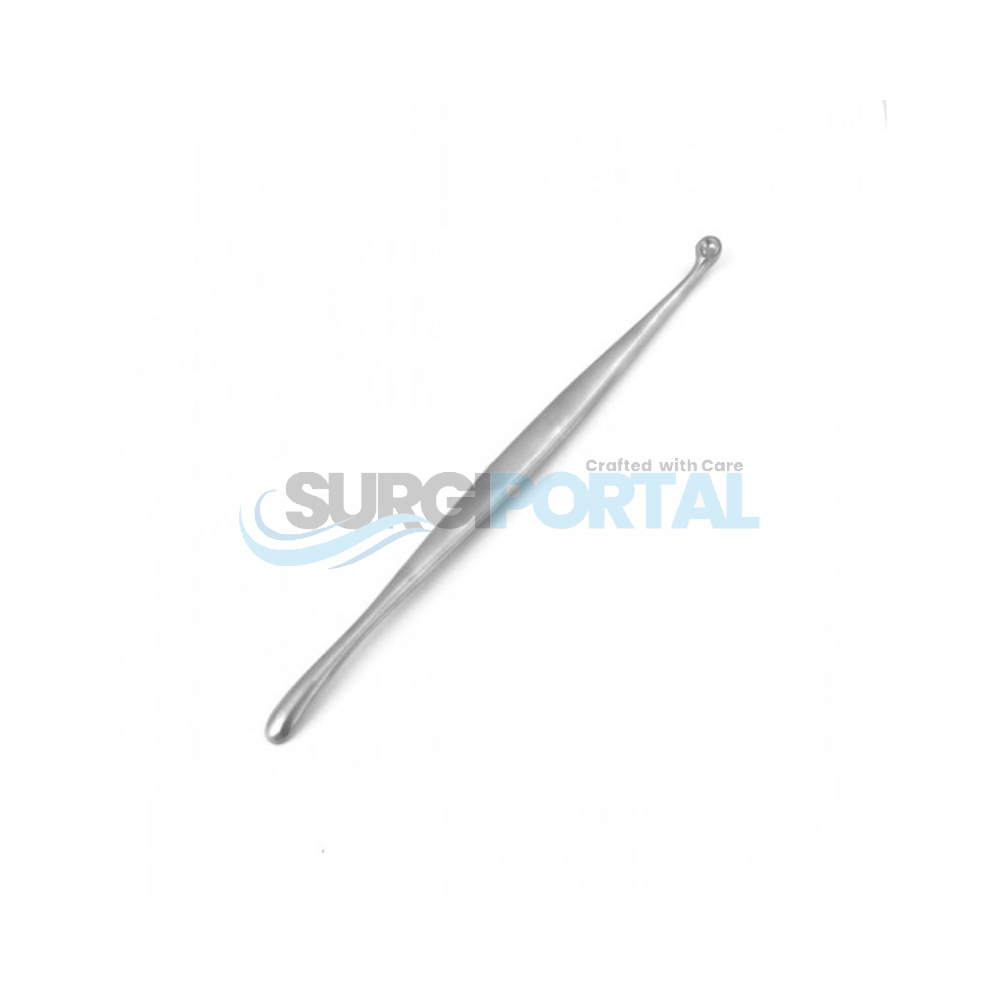
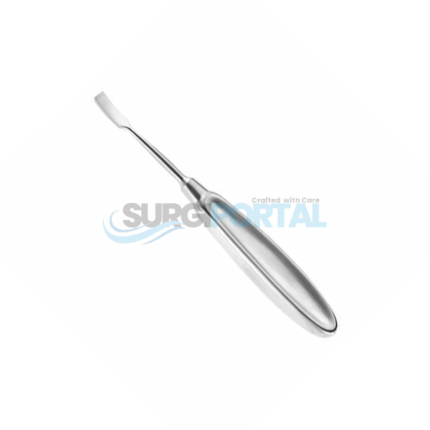
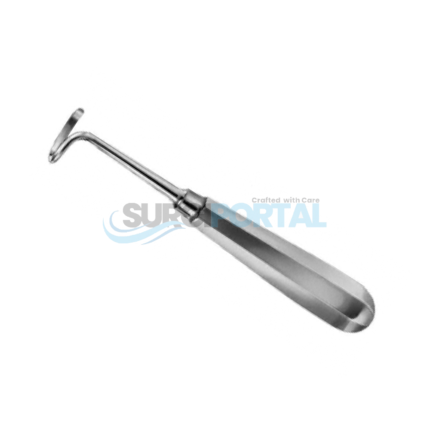
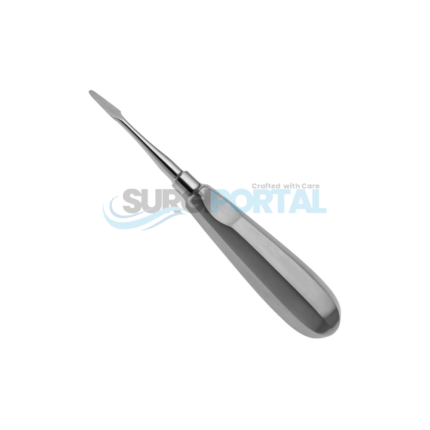
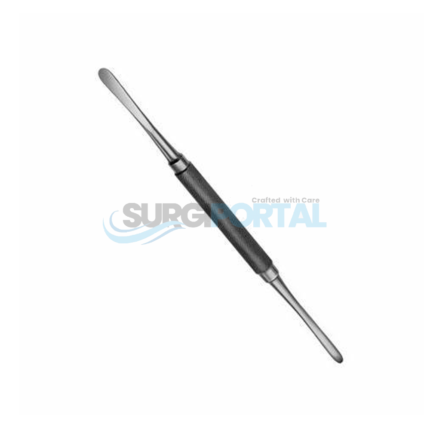
The Penfield Elevator is a specialized surgical instrument widely used in neurosurgery, orthopedic surgery, and other delicate operative procedures requiring precise tissue handling. Designed for controlled dissection and elevation of soft tissues, periosteum, and nerve structures, this instrument ensures accuracy while minimizing trauma to surrounding anatomical structures.
Manufactured from high-grade surgical stainless steel, the Penfield Elevator offers exceptional strength, corrosion resistance, and long-term durability. Its rigid yet finely balanced structure allows surgeons to perform meticulous dissection with confidence, especially in confined or sensitive surgical fields such as spinal surgery, cranial procedures, and bone exposure techniques.
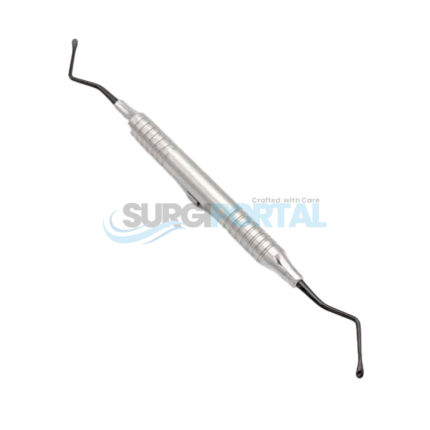
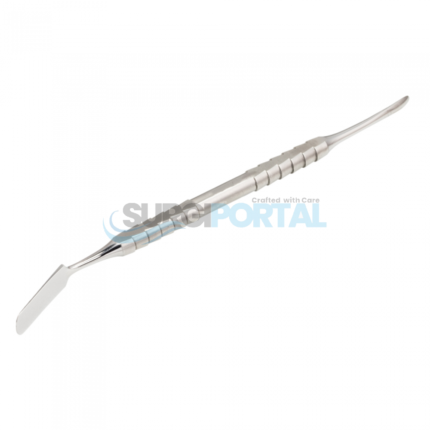
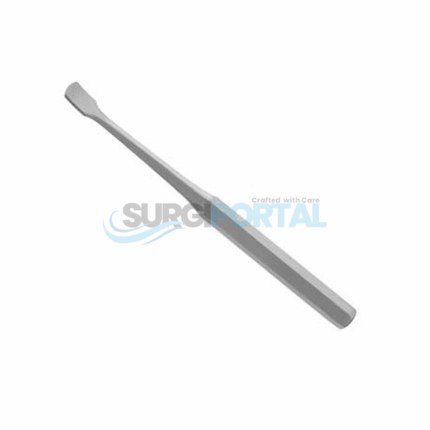
The instrument features a slender shaft with a smooth, ergonomic handle that provides a secure grip even in wet surgical environments. The working end is carefully shaped to allow efficient elevation of tissue layers without causing unnecessary damage. Depending on the variant, the tip may be straight, curved, or slightly angled, enabling surgeons to select the most suitable version for specific procedural requirements.
In neurosurgery, the Penfield Elevator is particularly valued for separating dura mater from bone surfaces and gently retracting neural tissues. In orthopedic surgery, it is frequently used for periosteal elevation during bone exposure, fracture fixation procedures, and implant placement. Its versatility also extends to maxillofacial and spinal surgeries.
One of the key advantages of the Penfield Elevator is its ability to provide tactile precision. Surgeons can easily feel tissue resistance, allowing for careful separation along natural anatomical planes. This reduces the risk of accidental injury and improves overall surgical outcomes.
The instrument is fully autoclavable and designed for repeated sterilization without loss of performance. Its stainless steel composition ensures resistance to rust, staining, and wear even after multiple high-temperature sterilization cycles.
With its combination of durability, precision engineering, and ergonomic design, the Penfield Elevator remains an essential tool in modern surgical sets. It is trusted by surgeons worldwide for procedures requiring high accuracy and delicate manipulation of tissues.
Key Features
- Manufactured from premium surgical-grade stainless steel
- Designed for precise tissue elevation and dissection
- Ideal for neurosurgery, orthopedic, and spinal procedures
- Smooth ergonomic handle for superior grip control
- Available in straight, curved, and angled tip variations
- Resistant to corrosion, rust, and staining
- Autoclavable and reusable for long-term use
- Lightweight yet highly durable construction
- Minimizes trauma to surrounding tissues
- Provides excellent tactile feedback during surgery
- Suitable for bone and soft tissue separation
Product Specifications Table
| Specification | Details |
|---|---|
| Product Type | Surgical Elevator |
| Application | Tissue elevation & dissection |
| Material | Surgical Grade Stainless Steel |
| Finish | Satin / Matte anti-glare finish |
| Sterilization | Autoclavable (Steam sterilization compatible) |
| Reusability | Reusable |
| Specialty | Neurosurgery & Orthopedic Surgery |
| Instrument Type | Penfield Elevator |
| Usage | Surgical tissue separation and elevation |
| Product Contents | 1 x Penfield Elevator |
Applications
The Penfield Elevator is widely used in the following surgical procedures:
- Neurosurgical procedures (cranial exposure, dura separation)
- Spinal surgeries (laminectomy, decompression procedures)
- Orthopedic surgeries (periosteal elevation, bone exposure)
- Maxillofacial surgeries
- Trauma and fracture fixation procedures
- Implant placement surgeries
- Bone grafting procedures
FAQs
Q1: What is a Penfield Elevator used for?
It is used for precise elevation and dissection of soft tissues and periosteum during neurosurgical and orthopedic procedures.
Q2: Is the Penfield Elevator reusable?
Yes, it is fully reusable and designed for repeated sterilization in autoclaves.
Q3: What material is it made from?
It is made from high-quality surgical-grade stainless steel for durability and corrosion resistance.
Q4: In which surgeries is it commonly used?
It is commonly used in neurosurgery, spinal surgery, orthopedic surgery, and maxillofacial procedures.
Q5: Does it come in different tip designs?
Yes, Penfield Elevators are available in straight, curved, and angled tip variations depending on surgical needs.
Q6: Can it withstand autoclave sterilization?
Yes, it is fully autoclavable and maintains integrity through repeated sterilization cycles.



Reviews
There are no reviews yet.